
What factors affect fabric breathability?

Breathability refers to the permeability of air through polymeric materials such as films, coatings and fabrics.
Fabric air permeability refers to the performance of air through the fabric in the presence of a pressure difference between the two sides of the fabric.
That is, both sides of the fabric in the specified pressure difference, the volume of air flowing through the unit area of the fabric in a unit of time, commonly used units for mm/s. Because the pressure difference is the necessary conditions on which the air flows, only in the measured fabric to maintain a certain pressure difference between the two sides of the fabric in order to produce the flow of air in the fabric.
Breathability affects the wearing comfort of fabrics, such as heat insulation and warmth. Fabric breathability is an important way for the body to transmit heat, gaseous moisture and gases such as carbon dioxide to the outside world.
Factors affecting fabric breathability
Fabric factors:
1. Fibre morphology and yarn structure: in the warp and weft yarn line density and warp yarn arrangement density is the same, shaped fibre fabrics are better than the round cross-section fibre fabrics, fabrics in the single-fibre thicker than the single-fibre fine air permeability is good.
2. Fabric organization: under the condition of the same arrangement density and tightness, the order of air permeability is plain
3. Fabric finishing process: fabric printing and dyeing finishing, the fabric structure becomes tighter, the air permeability decreases; reduction processing, the fabric fibre becomes finer, the pore between the fibre and yarn increases, the air permeability increases.
Environmental factors:
1. When the temperature is certain: the air permeability of the fabric is decreasing with the increase of the relative humidity of the air. After the fabric absorbs moisture, the fibre expands and the pores contract, so that the pores inside the fabric are reduced, and the pores in the fabric are blocked, resulting in a decrease in the air permeability of the fabric.
2. When the relative humidity is certain, the fabric air permeability rises with the ambient temperature. The thermal movement of air molecules is intensified, leading to an increase in molecular diffusion capacity.
3. When the temperature and relative humidity are constant, the air pressure P on both sides of the fabric changes, which affects the measured flow rate, and the effect is non-linear.


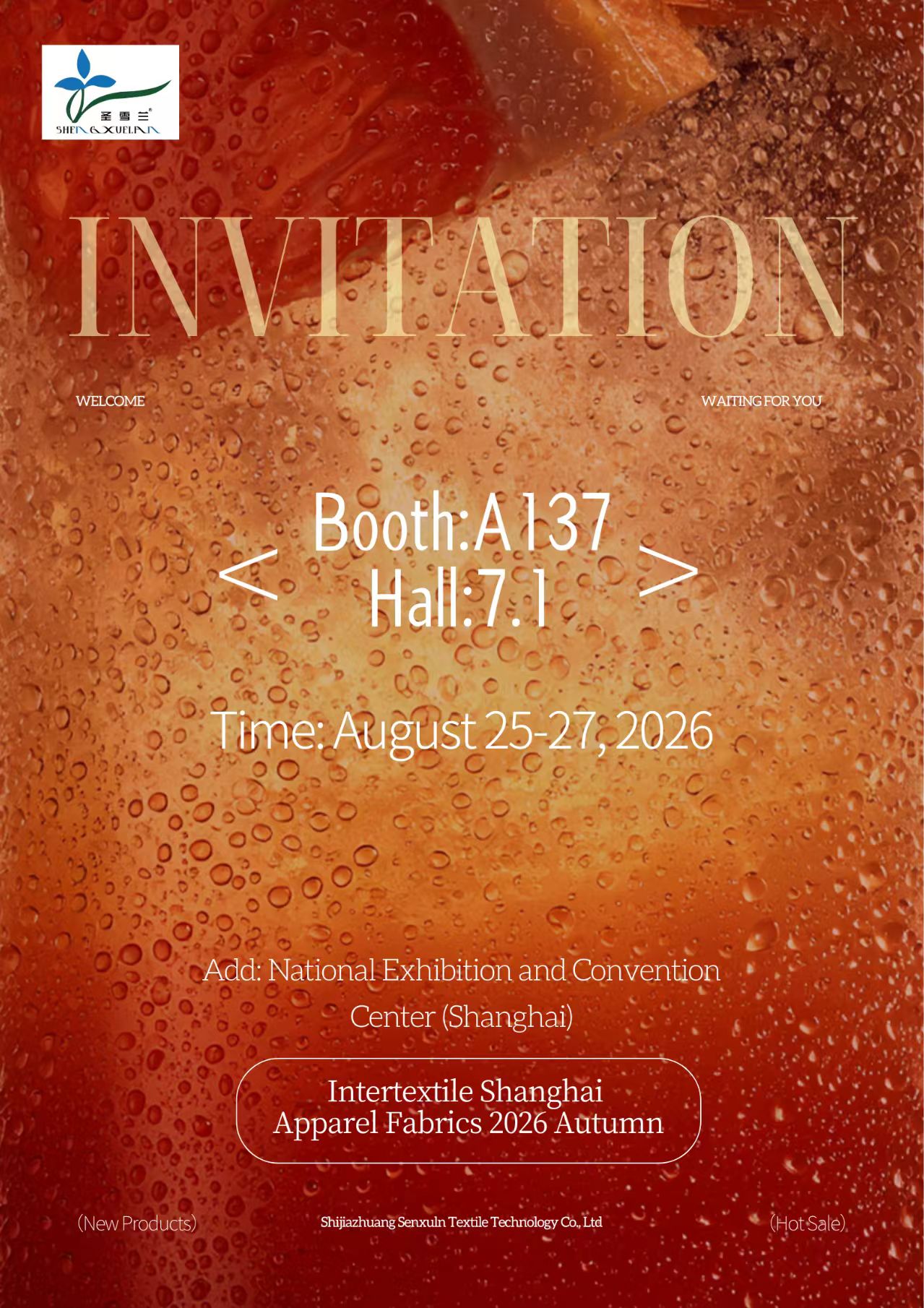 Welcome to Join 2026 Autumn Intertextile Shanghai Apparel and Fabric Fair.
  Welcome to join 2026 Spring Intertextile Shanghai Apparel and Fabric Fair.
  Welcome to join 2025 Spring Intertextile Shanghai Apparel and Fabric Fair.
  Welcome to join 2024 Autumn Shanghai Fabric Exhibition
  Why do fabrics deteriorate? What are the preventive measures?
  Characteristics of Textile Fibers
  Waterless Dyeing And Its Advantages And Disadvantages
  Four-way stretch fabric and its structure and processing method
  Fabric Characteristics and Selection Guidelines
  What is organic cotton? What is the difference between organic cotton and ordinary cotton?
  Yarn-dyed fabrics and its advantages and disadvantages
  How to distinguish between the front and back of fabrics?
  What is CoolCore fabric? What are the processing methods?
  What is Compact Spinning and its advantages, disadvantages and applications
  What are the new developed fibers?
  Characteristics and Storage Methods of Woven Fabrics
  What is single jersey? What are the advantages and disadvantages?
  What is fabric shrinkage? How to calculate shrinkage?
  Intertextile Shanghai Brings Great Success
  What is washed cotton? What are the features of washed cotton?